
About the award
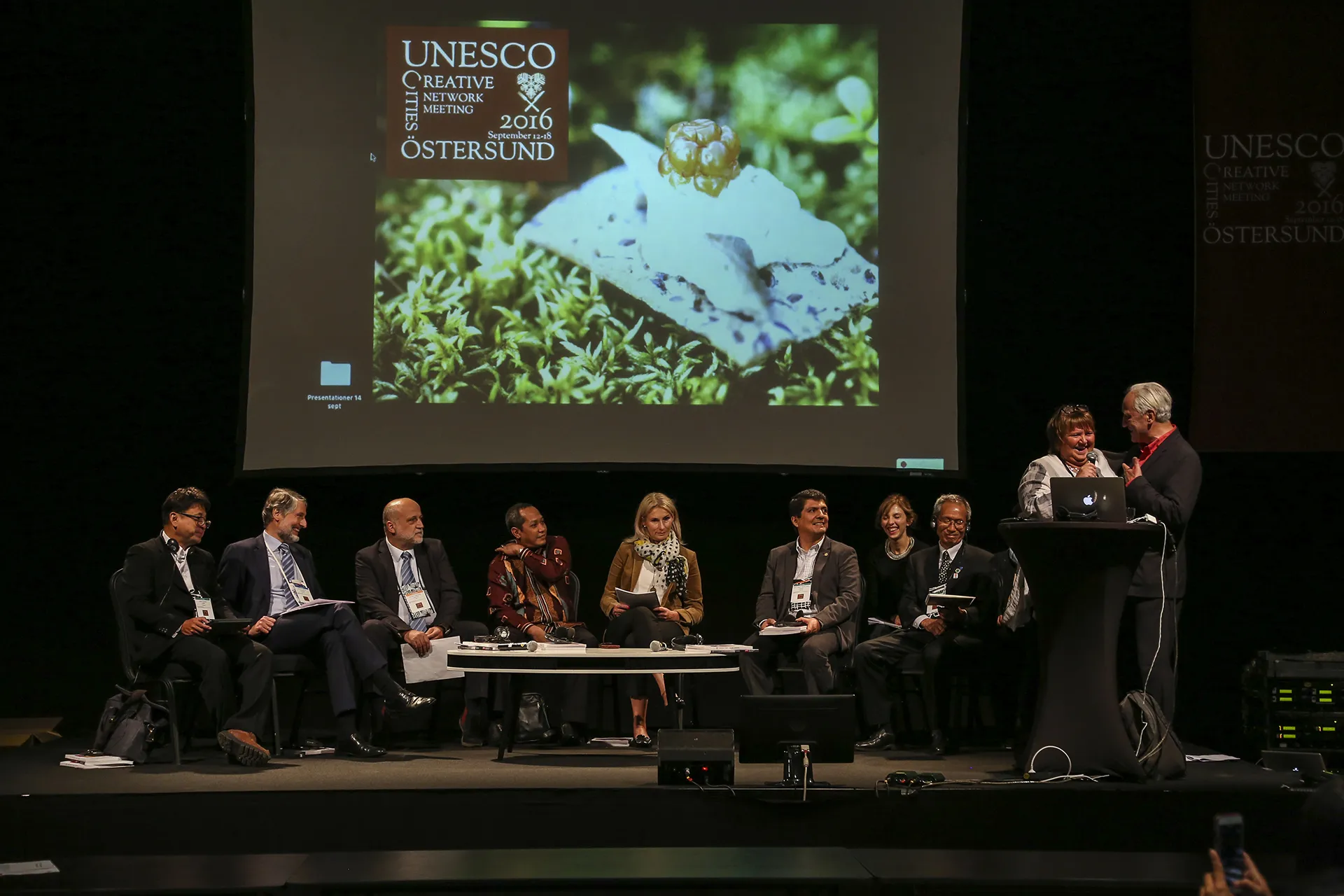
Östersund and the Jämtland Härjedalen Region are a UNESCO Creative City of Gastronomy. We received the designation in 2010 from the UNESCO Creative Cities Network (UCCN) and remain the only region in Sweden to have been awarded it. This speaks volumes about our ingenious food creators and our fantastic culinary craftsmanship. It says nothing less than that we are Sweden’s most taste-conscious region!
Small-scale craftsmanship
The foundation of our culinary craft is all the enthusiastic and food-focused people in the region; farmers, chefs, restaurateurs, and culinary entrepreneurs. They form a creative cluster for the exchange of experience and inspiration. Another important driving force is our national center for artisanal food, Eldrimner, which offers knowledge, support, and inspiration to chefs and small-scale food producers in the region, the country, and the Nordic countries.
Throughout the county, it is easy to enjoy the local gastronomy. Here you will find both culinary excellence and locally produced products of the highest quality, and together we work to continue offering the Jämtland taste of clean, fair, and truly good food to as many people as possible.
What has happened since we received the award?
The UNESCO Creative City of Gastronomy designation and the extensive network we gain access to through the UNESCO Creative Cities Network provide the region’s food producers with fantastic opportunities. Here are some examples of what has happened since we received the award in 2010:
Facts about the UNESCO Creative Cities Network (UCCN)
The UNESCO Creative Cities Network was established in 2004 to support international cooperation between cities that have identified creativity as a strategic factor for sustainable urban development. Within the network, cities designated by UNESCO work within one of eight fields: crafts and folk art, media arts, film, design, architecture, gastronomy, literature, or music. The network’s objectives are to:
The purpose of the network, which consists of more than 400 cities in over 100 countries, is to strengthen businesses and actors within the creative and cultural sectors in the county over the long term. The work is integrated with the regional food and food strategy and in relation to Agenda 2030, with a particular focus on Sustainable Development Goal 11 on sustainable cities and communities and Goal 17 on global partnerships.


